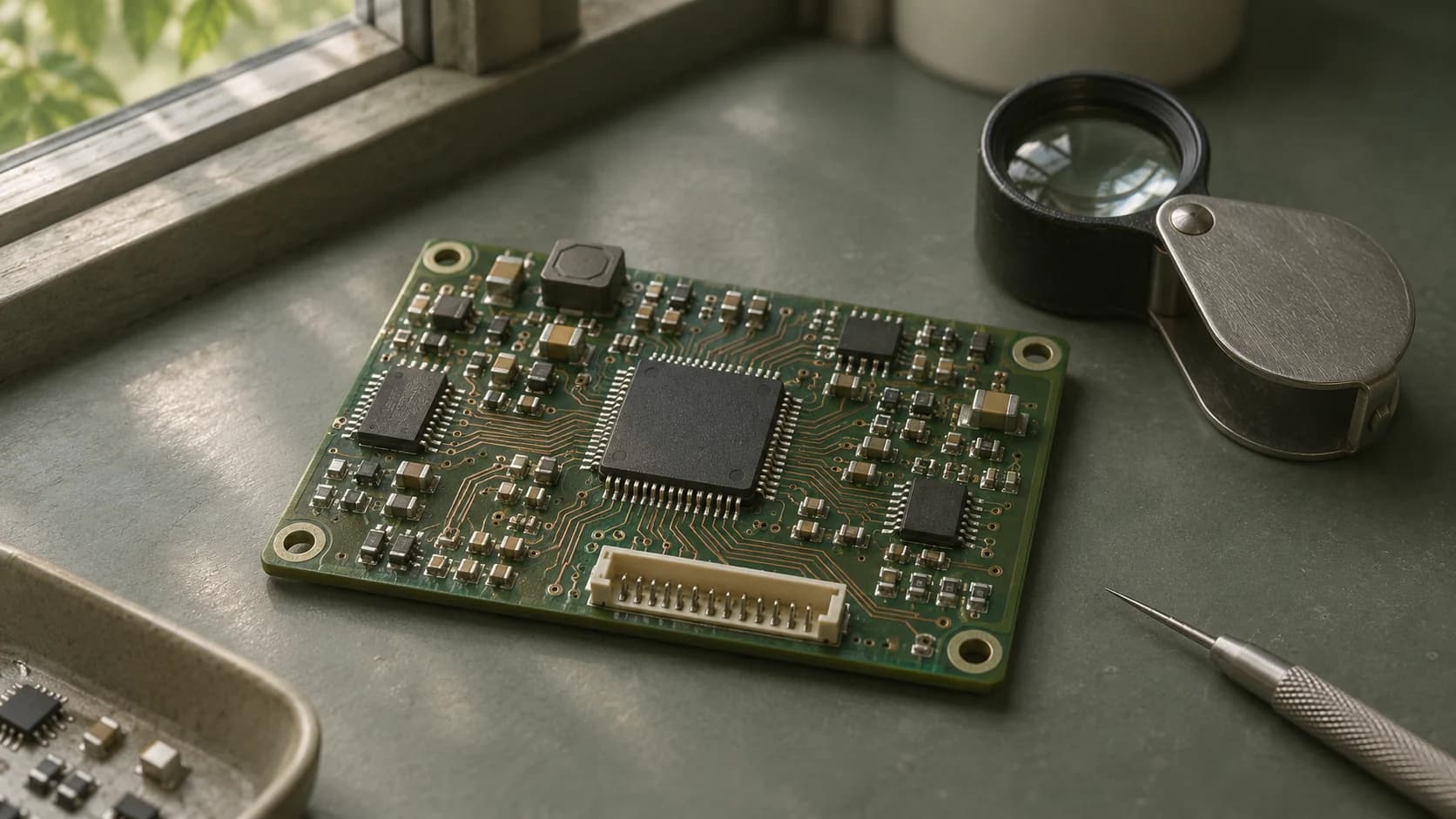
These are the problems we want to study, drawn from building software and working with devices. Each needs a small, useful test before it needs a paper.
Proposed directions. No findings published yet.
Why enter the same thing twice?
How can we connect spreadsheets, paper, and existing software without losing records or interrupting daily work?
Possible first test
Start with one handover between two records. Track which fields are copied, where mistakes enter, and what a connection between them would need to preserve.
What should keep working when the connection stops?
Study offline work, safe retries, and recovery on the devices people already have.
Possible first test
Interrupt a fictional handover, retry it, and inspect the saved record. Check for missing information and repeated actions before adding more features.
Could a small device do a practical job?
Study sensors and simple electronics with cost, repair, and local component availability in mind.
Possible first test
Choose one measurement. Compare a simple sensor with an available reference, then record the parts, power requirements, and conditions where it fails.
When is an AI tool worth using?
Compare accuracy, cost, and the effort of checking an assistant against a simpler tool on the same task.
Possible first test
Give an AI tool and a simpler approach the same small task. Keep the wrong answers and the time spent checking them in the comparison.
Where could a system let someone down?
With permission, study access boundaries, exposed information, and recovery, then report sensitive risks to the people responsible.
Possible first test
Use a system we own or have permission to test. Start with account permissions and recovery, document a repeatable case, and propose a fix.
What can we leave for the next person?
Turn a useful script, a failed experiment, or a clearer explanation into something another student or developer can build on.
Possible first test
Ask someone outside the project to follow the setup notes. Keep track of the missing steps before calling a tool ready to share.
AI artwork & licensed footage. Visual references, not records of our experiments.
What gets lost when we write like ourselves?
A message might move between Egyptian Arabic, Arabizi, and English in the same sentence. We want to understand where AI gets the meaning right, where it misses, and which carefully reviewed examples would help us test it.
A possible first step: a small collection of fictional everyday messages, reviewed by fluent speakers and paired with a clear task.
Sentence review
Synthetic exampleEG · 001
ممكن تبعتلي الفاتورة؟
Could you send me the invoice?
LanguageArabic
Next stepCheck the wording
Reviewer note
Add a review note
Save review
Illustrative workflow. No released dataset.
A fictional Egyptian Arabic sentence is labelled, given a review note, and marked for a second review. This is an illustration of a possible workflow, not published research.
If one of these problems turns up in your work, tell us where it happens.