
How we work.
We are still learning. This is the process we want each experiment to follow, so someone else can inspect the work and try it again.
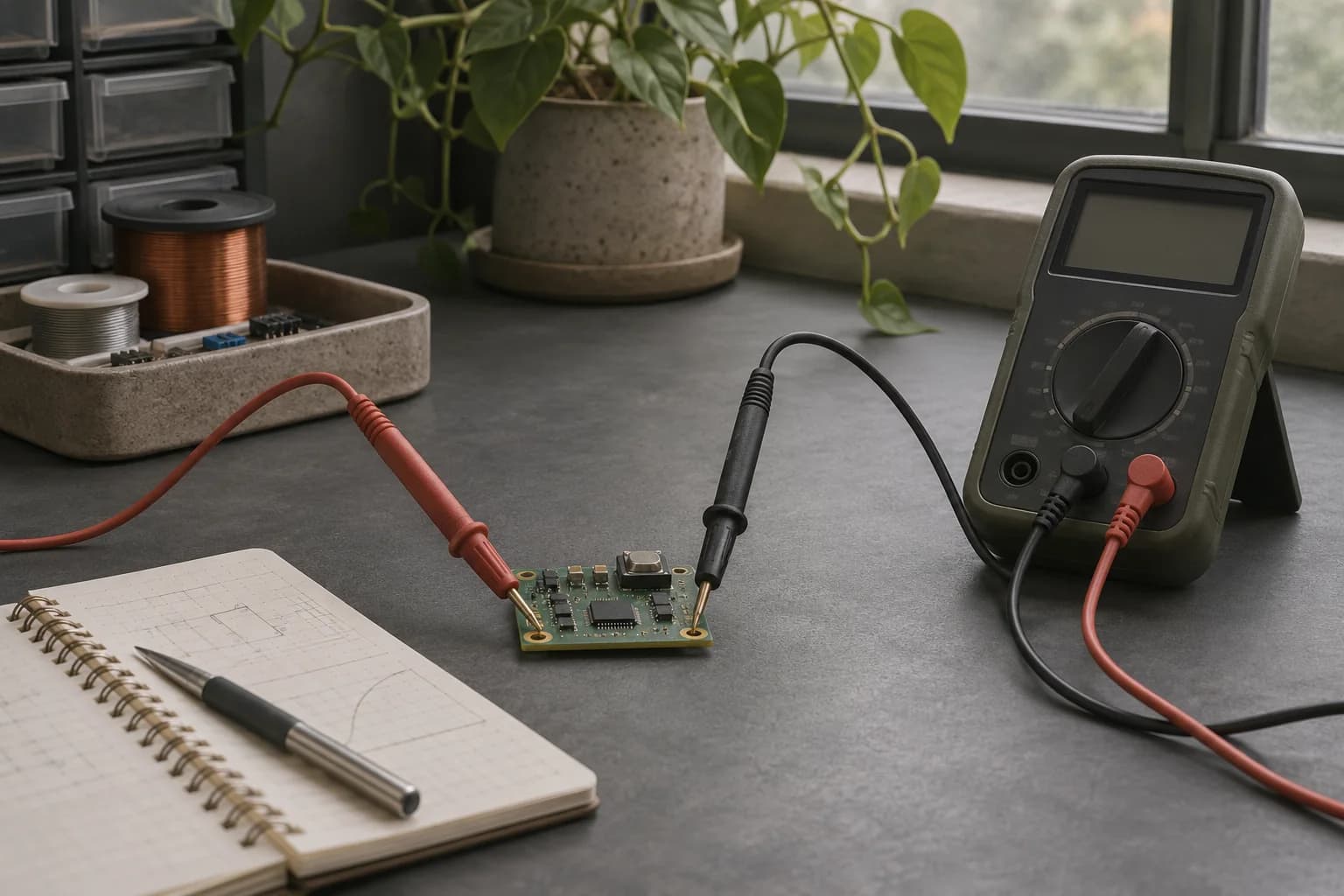
Write down the question.
Choose one task and define what we need to learn. Read the existing work first. A simpler tool or an existing project may already solve it.
Set up a test we can repeat.
Keep the inputs, versions, hardware, and starting conditions. Compare with a baseline. Change one condition at a time and save the steps.
Record the limits.
Keep failed attempts, unexpected behaviour, and cases we did not test. A result on our bench does not establish what will happen everywhere.
Ask for another pair of eyes.
Give someone the question, method, files, and limitations. Correct the gaps before considering a release. Make the review status clear when we publish.
For example, an offline handover test would include the failed connection, retry, saved record, and any duplicate. A successful screen alone would not be enough.
The files behind an experiment
What we plan to include, depending on the experiment.
- Software
- Code, dependency versions, test cases, and steps to repeat the result.
- Hardware
- Circuit diagrams, component lists, firmware, and test conditions.
- AI and data
- Source and permission notes, evaluation cases, model versions, and known limitations.
- Security
- The agreed test scope, affected versions, mitigation notes, and disclosure record.
What a release should contain.
This illustrative package shows how the method, code, and relevant files can sit beside a report. It is not a published experiment.

An imagined research package brings a manuscript, method, code, and data notes together for review. This demonstration does not represent an existing paper or dataset.
AI assistance and review.
We use AI to explore literature, draft code, and think through examples. We verify sources, review the implementation, and test claims. Each report will explain where AI helped and what people checked.
A technical report or preprint is not the same as peer reviewed work. We will make that distinction clear and publish useful negative results too.